Cooking in Stainless Steel: The Dos and Don'ts Every Home Cook Needs
Egg sticking to the pan? Rainbow stain after three dinners? Your pan’s not broken — you’ve probably just skipped a step. Cooking in stainless steel takes a slightly different technique to non-stick, but once you know the rules, it’s remarkably straightforward. Whether you’re using stainless steel cookware every night or breaking in a new set, here’s how to stop the sticking, tackle stains and keep your cookware performing properly.
Why Does Food Stick to Stainless Steel?
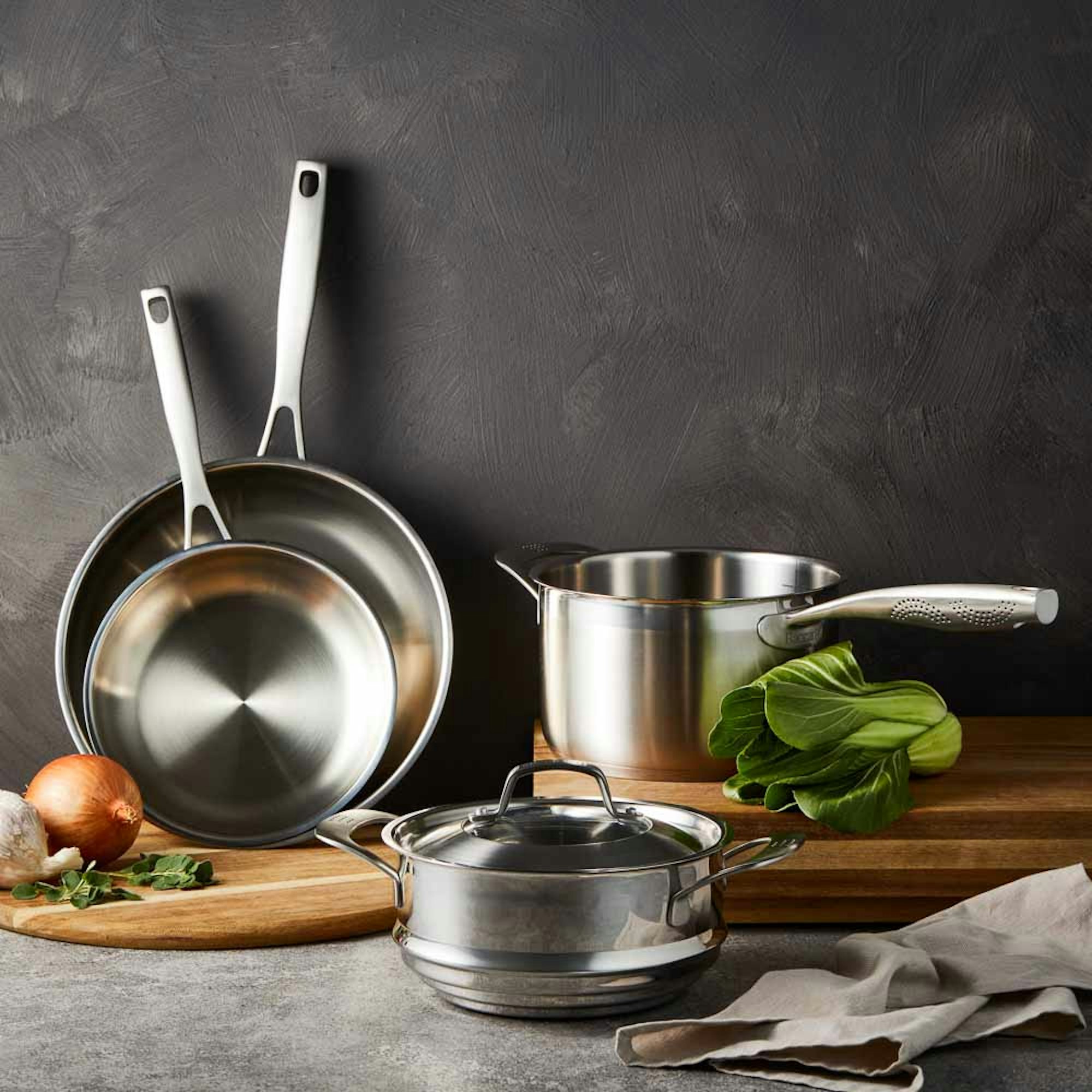
Stainless steel behaves differently to a coated non-stick pan. As the pan heats, its microscopic surface irregularities change; getting the surface properly and evenly preheated helps food release more readily instead of gripping.
That’s where construction matters. Baccarat iD3 Stainless Steel cookware uses a 5mm tri-ply core designed to distribute heat evenly across the cooking surface, helping avoid cooler spots where food is more likely to stick. Get the heat right first and the rest becomes much easier.
How to Cook in Stainless Steel Without Sticking
Learning how to cook in stainless steel without sticking comes down to a repeatable routine rather than cranking up the heat or pouring in extra oil.
- Preheat the pan for 2 to 3 minutes. Start with a clean, dry pan over medium heat. Stainless steel needs time to heat before the food goes anywhere near it.
- Do the water-bead test. Drop a small amount of water onto the surface. If it forms beads that glide around the pan rather than immediately evaporating, you’re ready to cook. Even heat distribution makes this test more useful across the cooking surface; on a thin or unevenly heating pan, one hot spot can give you a misleading result.
- Add oil after preheating. Once the pan passes the water test, let the water evaporate before adding your cooking oil. Give the oil a moment to heat, then add your ingredients.
- Stick with medium heat. More heat isn’t automatically better. Stainless steel holds and transfers heat efficiently, so medium is plenty for most everyday cooking. High heat is better reserved for specific jobs such as searing.
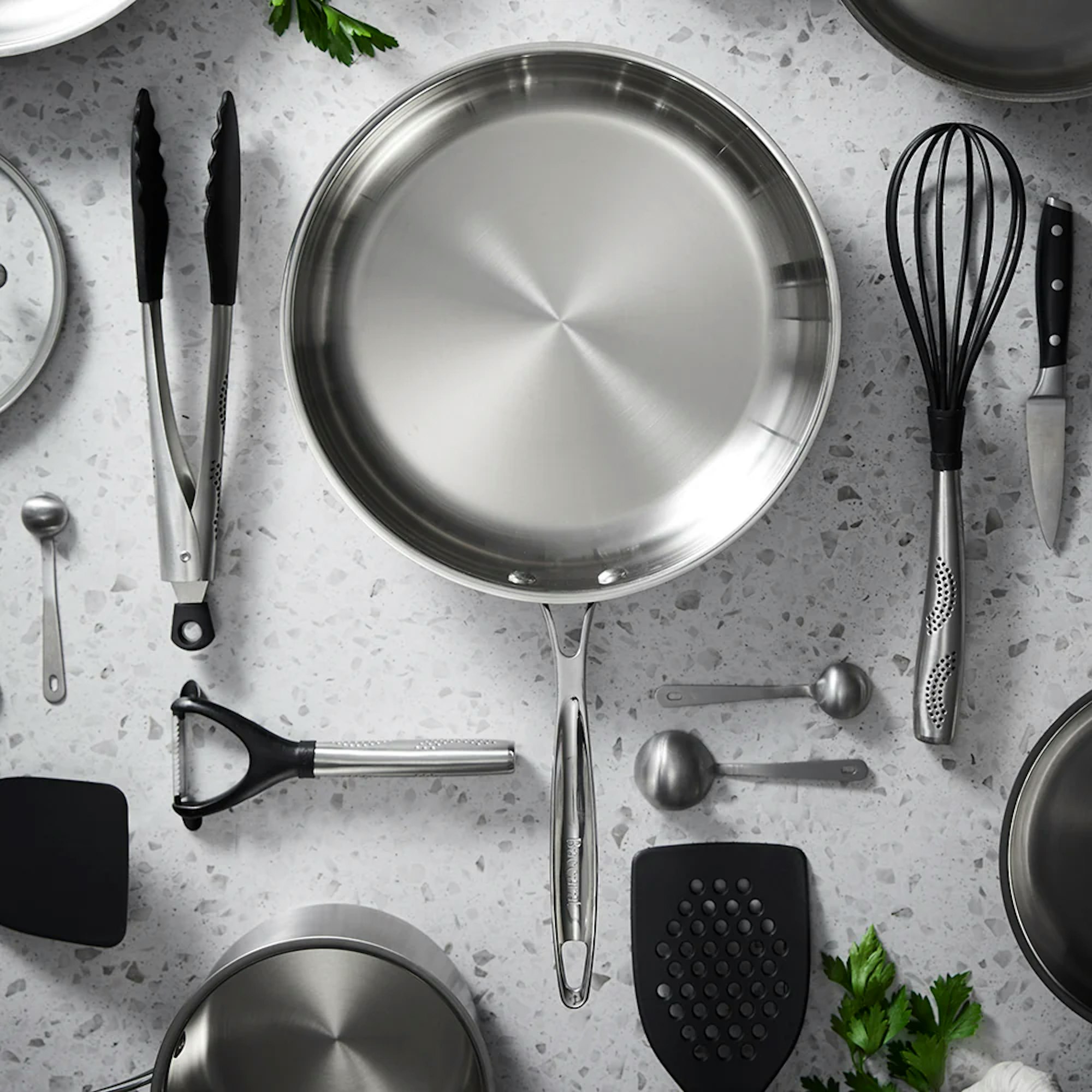
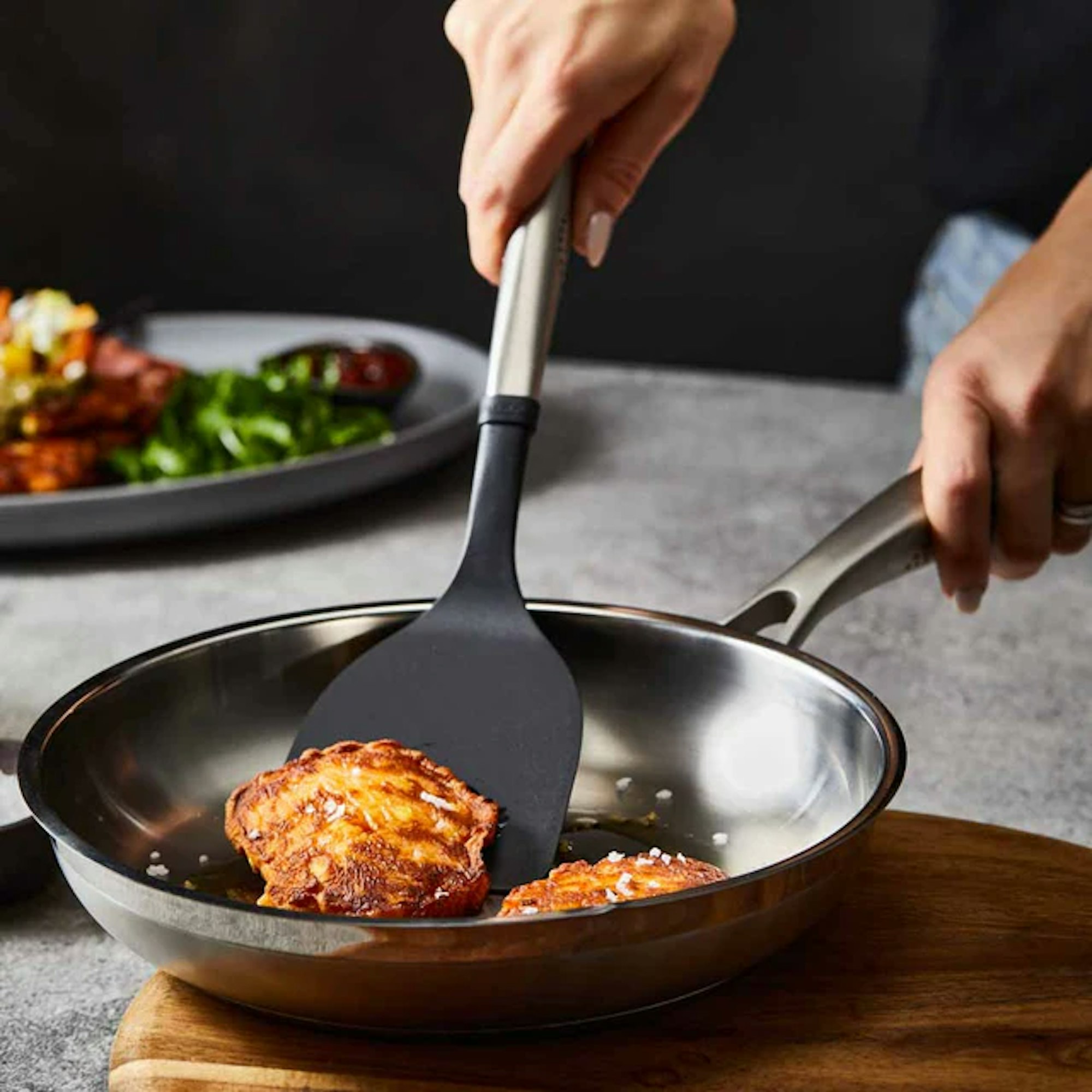
- Use the right utensils. Wooden, silicone and suitable stainless steel tools all work well. Browse Baccarat’s kitchen utensils if your old non-stick setup could use an upgrade too.
One more tip: don’t fight your food. Meat and fish can initially grip the surface before naturally releasing as they brown. If you have to wrench a fillet away from the pan, it probably isn’t ready to turn.
What Not to Do With Stainless Steel Cookware
Good stainless steel cookware is tough, but tough doesn’t mean it benefits from being abused.
Avoid excessive high heat when it isn’t needed. Don’t scrub stubborn marks with steel wool or harsh abrasive cleaners, gentler cleaning helps preserve the 18/10 stainless steel finish used across Baccarat’s iD3 Stainless Steel range and keeps your guarantee-backed cookware looking its best.
Don’t leave highly acidic or salty foods sitting in the pan for extended periods after cooking, and never skip preheating because you’re in a hurry. Saving two minutes at the start is a poor trade for ten minutes spent scraping dinner off the bottom later.
Is there anything you shouldn’t cook in stainless steel cookware?
There’s very little you need to rule out. It is safe to cook with stainless steel, including when preparing acidic ingredients such as tomatoes or citrus. Quality 18/10 stainless steel is suitable for everyday cooking; the bigger issue is leaving salty or acidic food sitting in the cookware for extended periods after the meal is finished.
How to Protect Stainless Steel From Rusting and Staining
Wondering how to protect stainless steel from rusting? Its chromium content creates a passive protective layer that gives stainless steel its corrosion resistance. The 18/10 stainless steel used in Baccarat iD3 Stainless Steel cookware is designed for durability, but good habits still matter: wash after use and dry thoroughly to help prevent water spots and surface marks.
For how to clean stains on stainless steel pans, start gently. Try a paste of baking soda and water on stubborn marks, then clean with a soft sponge. Try to avoid steel wool and abrasive pads.
Discolouration or a stubborn stain doesn’t automatically mean you’ve ruined your cookware. Follow Baccarat’s Cookware Care Guide for the full care routine. Baccarat’s Lifetime Guarantee also stands behind eligible cookware, so look after the finish and keep cooking.
Ready to Put the Technique to Work?
Once you know how stainless steel behaves, it stops feeling temperamental and starts showing why good cooks swear by it.
If you’re ready to complete or upgrade your setup, explore Baccarat’s stainless steel cookware, cookware sets and frying pans. With the right technique and Baccarat’s Lifetime Guarantee behind eligible cookware, you’re looking after an investment designed to stay in your kitchen for the long haul.
Frequently Asked Questions
Is It Safe to Cook With Stainless Steel?
Yes. Quality stainless steel is a durable choice for everyday cooking and can be used with acidic and salty ingredients. The key is not to leave those foods sitting in the cookware for long periods after cooking. Wash the pan once you’re finished, then dry it thoroughly.
Does Stainless Steel Cookware Rust?
Stainless steel is highly resistant to rust because chromium in the material helps form a protective passive layer. The 18/10 stainless steel used in Baccarat iD3 Stainless Steel cookware is designed for durability, while proper washing and drying further reduce the risk of corrosion. Eligible Baccarat cookware is also supported by a Lifetime Guarantee.
Is Stainless Steel Cookware Non-Stick?
No. Stainless steel doesn’t have a conventional non-stick coating. Correct preheating and oiling can, however, create excellent food release for many cooking tasks. An evenly heating pan helps make the technique more consistent, which is where the 5mm tri-ply construction of Baccarat iD3 Stainless Steel cookware comes into its own.
What's the Best Way to Clean Stains Off a Stainless Steel Pan?
For everyday cleaning, use warm soapy water with a soft sponge or cloth. For more stubborn stains or burnt-on residue, try a paste made from baking soda and water before washing normally. Avoid steel wool and harsh abrasive pads, which can scratch and dull the stainless steel finish.
Why Does Food Stick to Stainless Steel Even When I Preheat It?
Usually, either the pan still wasn’t at the right temperature when you added the oil, or cold food dropped the surface temperature too quickly. Let refrigerated ingredients lose some of their chill where food-safety requirements allow, and use the water-bead test above to check the pan before adding oil and cooking.
Related articles
For more advice on cooking in stainless steel and caring for the rest of your kitchen collection, read: