What Makes Cookware Last (And Is It Worth the Investment?)
It’s pretty unlikely that your favourite pan will one day perk up and announce that it’s on its last legs. The end usually comes as a slow decline: the base begins to wobble, the coating loses its slickness, the handle develops a little play, and before you know it, the pan that was supposed to last for years is relegated to the back of the cupboard, waiting until the day you embark on a spring clean … three years down the track.
The problem is that “built to last” doesn’t tell you much on its own. A pan can have a premium price tag and still have weak points, while a well-made pan can quietly get on with the job for years without much fuss.
So, what should you actually look for? Let’s break down how cookware fails, what construction has to do with it, and whether a longer guarantee makes a more expensive pan a better investment.
How Cookware Really Dies: Three Preventable Causes of Failure
Most cookware damage comes down to a few familiar culprits: thermal shock, excessive heat and physical wear. Knowing what causes the damage makes it much easier to tell genuine durability from a nice-sounding claim.
- Thermal shock: Take a hot pan off the stove and plunge it straight into cold water. The sudden temperature change makes the pan's different materials expand and contract at different rates. Over time, that can contribute to distortion, cracking or damage to the cooking surface. The same goes for adding cold liquid or oil to extremely hot cookware. A pan doesn't need to be treated like fine china, but it does appreciate not being repeatedly shocked between extremes.
- Heat and warping: An empty pan on high heat is one of the quickest ways to put unnecessary stress on cookware. Without food or liquid to absorb and distribute some of that energy, temperatures can climb rapidly. Using the wrong-sized cooking zone can also cause uneven heating, especially when only part of the base sits over the heat source. Repeated uneven heating and cooling can eventually contribute to warping. Match the heat to what's actually in the pan, and warping stops being a risk.
- Scratches, abrasion and corrosion: Non-stick coatings don't love metal utensils, abrasive scourers or being stacked together without protection. Scratches can compromise the surface and, once a coating starts deteriorating, the damage tends to spread through continued use.
Stainless steel has its own vulnerabilities. It's tough and corrosion-resistant, but prolonged exposure to moisture, salt or acidic foods can contribute to staining or pitting. And then there are the smaller things: dishwasher cycles that aren't suitable for the cookware, loose hardware and handles subjected to more heat or movement than they're designed to take.
None of this means cookware needs to be treated delicately, though; it really just means construction and care need to work together.
How to Tell if Cookware is Good Quality: Why Durability Matters
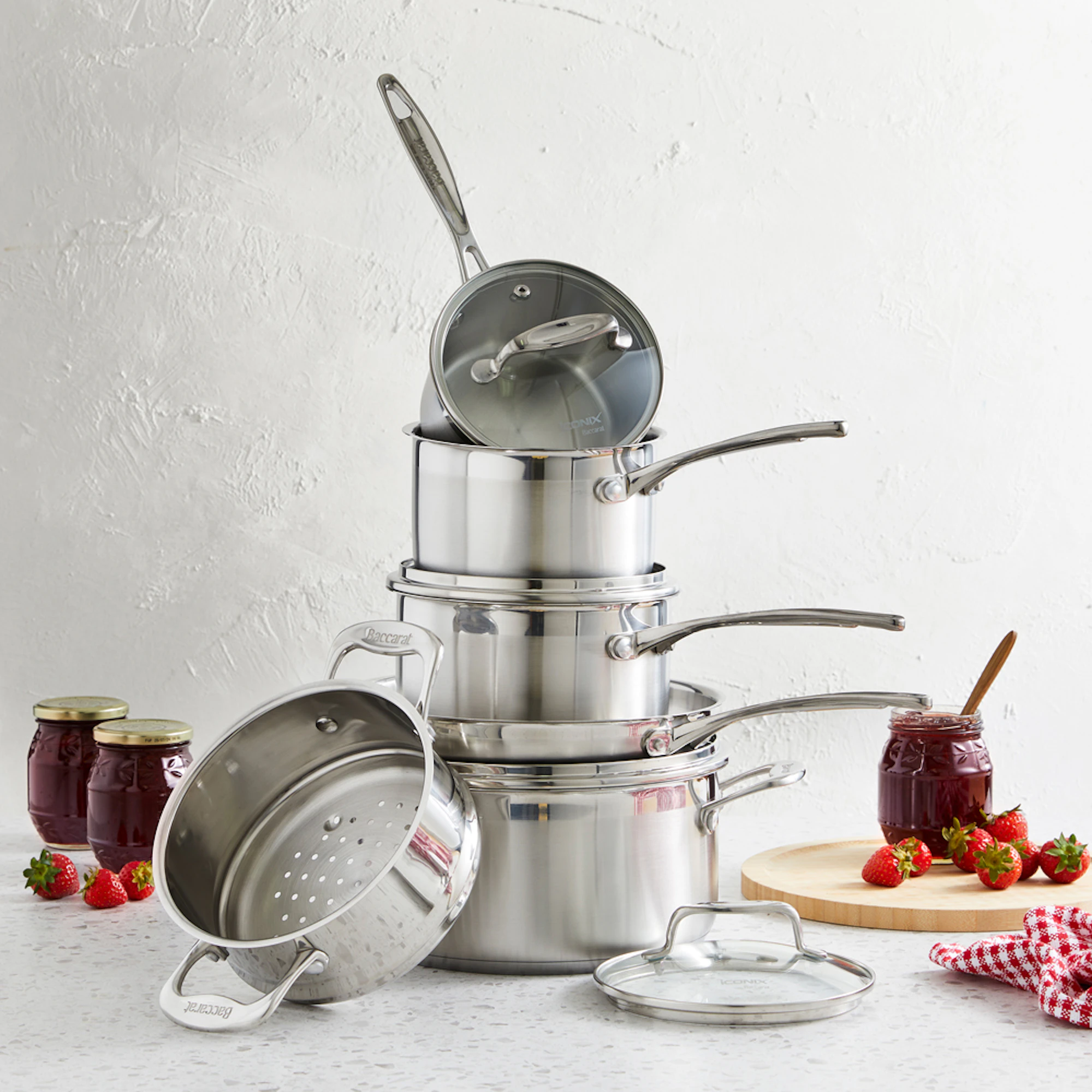
What actually makes one pan outlast another is how its materials are put together, not just which ones are used. Baccarat's stainless steel cookware, for example, uses 18/10 stainless steel with aluminium-core or impact-bonded construction to distribute heat efficiently whilst maintaining a durable cooking surface.
Stainless steel is hard-wearing and corrosion-resistant, but it isn't the only material doing the work. The aluminium in the base helps spread heat more evenly, reducing the hot spots you can get with a thinner, single-material pan. Baccarat uses encapsulated aluminium bases and, in some ranges, more extensive clad construction. You probably won't think about that while you're cooking, but it can make a difference over years of regular use.
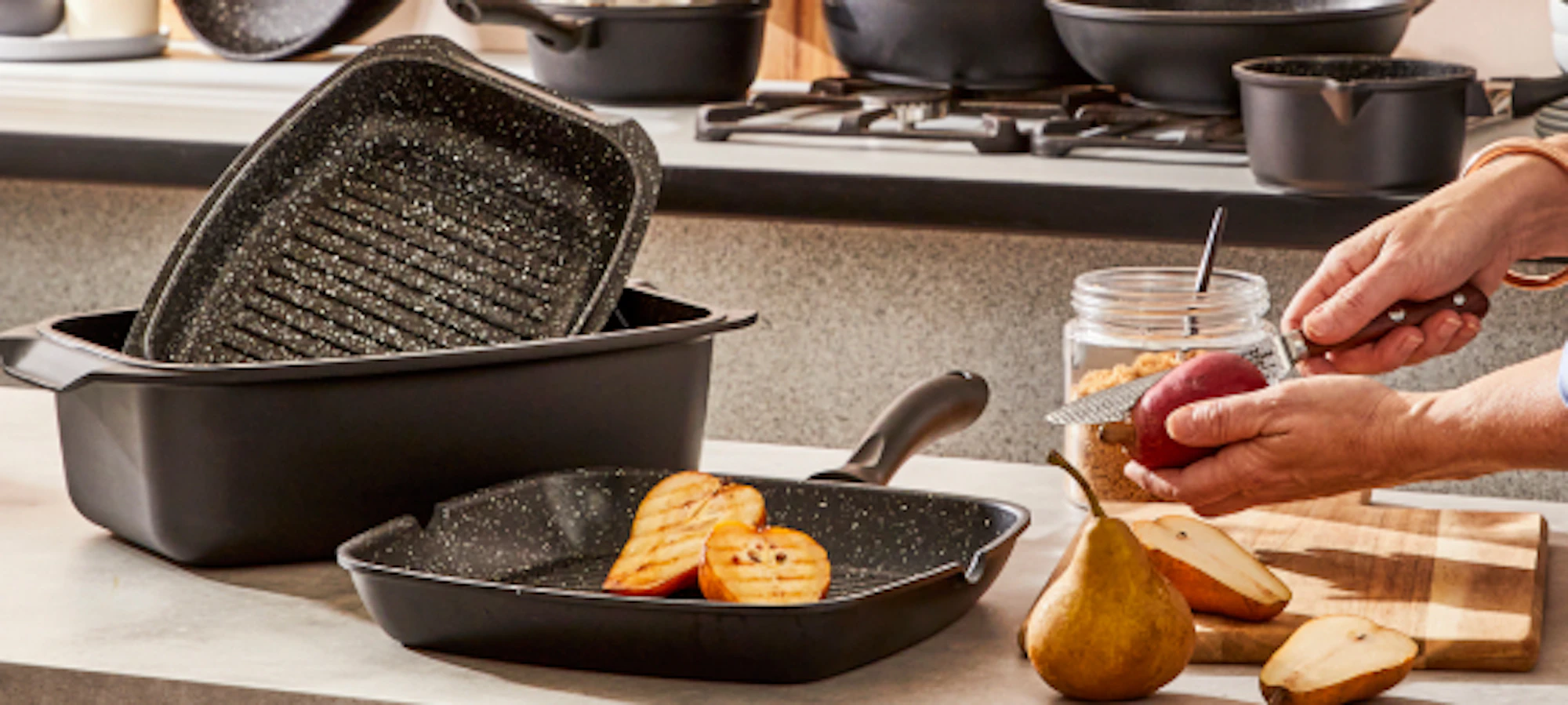
Ceramic non-stick cookware takes a different approach. Baccarat's StoneX2 range uses a cast-aluminium body with a ceramic non-stick interior, designed to distribute heat evenly and release food easily.
With non-stick cookware, the coating is the part you need to look after. Too much heat, rough cleaning or the wrong utensils can wear it down over time. Skip the metal utensils and abrasive scourers, and you’ll find the coating holds up for a lot longer.
Material by Material
18/10 stainless steel, impact-bonded base. Resists corrosion, rust and staining; the bonded base helps distribute heat evenly. Worn out by excessive heat, thermal shock and abrasive cleaning.
Real Baccarat example: iD3 SS
Ceramic non-stick (StoneX2). Resists sticking and the need for excess oil. Wears out from abrasive cleaners and sharp or metal utensils, which can scratch the coating.
Real Baccarat example: StoneX2 range
Japanese steel, 420J2 (53 HRC). Resists rust and holds up well to everyday cutting. Wears out from more frequent sharpening if not washed and dried properly.
Real Baccarat example: Damashiro Japanese-steel knives
German steel, 1.4116 (55 HRC). Resists edge loss under everyday cutting. Wears out slowly, needing slightly more effort to resharpen once it does.
Real Baccarat example: Wolfgang Starke German-steel knives
Japanese vs German Steel Knives
Choosing between Japanese and German steel is really choosing between two things: a thinner blade that takes a sharper edge, or a thicker one that holds up to heavier use.
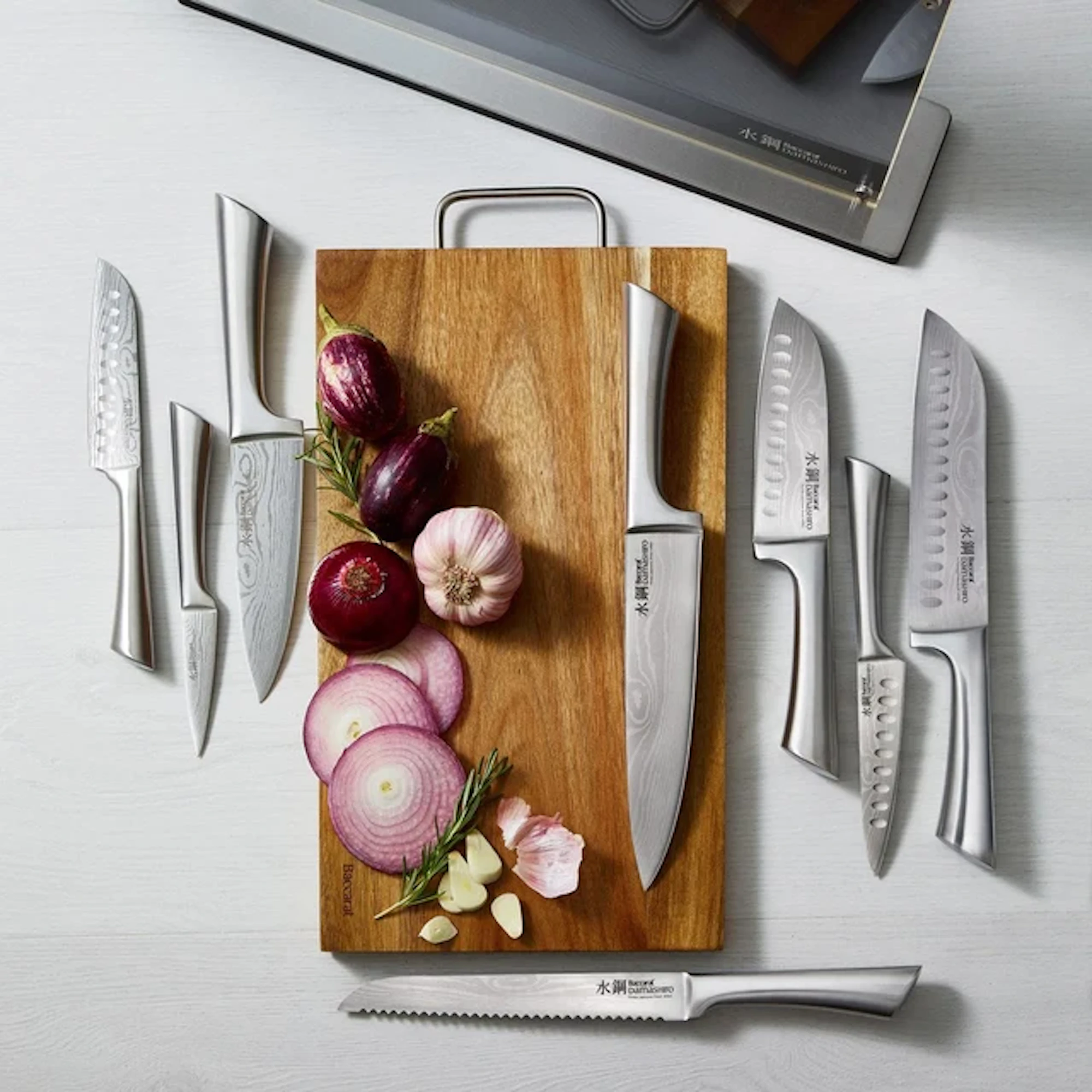
- Baccarat's Japanese-steel knives use 420J2 stainless steel at 53 HRC, with generally thinner blades made for precision cutting. Baccarat notes that the softer steel requires more frequent sharpening.
- Our German-steel knives use 1.4116 stainless steel at 55 HRC, with generally thicker blades designed for sturdier everyday use. The harder steel typically requires less frequent sharpening, although it can be slightly harder to sharpen when the time comes.
Our verdict? Home cooks who hate resharpening tend to land on German steel; anyone chasing a razor-sharp edge will generally lean Japanese.
What Does a Cookware Lifetime Guarantee Really Mean?
The key question here is defining what a cookware guarantee is really worth. A “Lifetime Guarantee” sounds reassuring, but the word lifetime doesn't tell you much unless the brand defines it.
Baccarat does. Its Lifetime Guarantee starts from the date of purchase and runs for 25 years. It includes defects in workmanship or materials, as well as abnormal deterioration when the product is used according to the care instructions and for normal domestic use. That's a much more useful number than simply saying “for life”.
It's also important to read the other half of the guarantee. A guarantee isn't an insurance policy against every mark a pan can pick up in a busy kitchen. Cosmetic damage, such as scratches and water marks, misuse and commercial use aren't the same thing as a manufacturing defect.
That distinction is worth understanding before you buy any cookware. A guarantee should tell you what a manufacturer is prepared to stand behind, not permit you to ignore the care instructions.
A defined 25-year term also gives you something concrete to consider when comparing cookware. You're no longer weighing “premium” against “budget”. You're looking at construction, expected use and the period for which the manufacturer is prepared to back its product.
Guarantee Terms by Brand
- Baccarat. Lifetime Guarantee running 25 years from the purchase date, stated explicitly.
- Le Creuset. Lifetime Guarantee on most cookware; term not defined in published terms.
- HexClad. Lifetime Guarantee on most cookware; term not defined in published terms.
- GreenPan. Warranty; term not defined in published terms.
Is Expensive Cookware Worth It?
Sometimes, but price alone doesn't prove better performance. In fact, independent testing from CHOICE makes that point rather well: its testing has found that price or brand generally has little impact on cooking performance, and some less expensive cookware performs extremely well. Its non-stick durability testing also uses 10,000 scourer passes under a fixed weight to assess abrasion resistance.
Sure, the price will tell you what you paid, but the more useful question you should ask is what happens after the first year, the fifth year and the tenth. Think about cookware in terms of cost per use rather than sticker price. A cheaper pan that needs replacing several times may not remain cheaper. Conversely, if an inexpensive pan performs well and suits the way you cook, paying more isn't automatically justified.
Before buying, ask yourself:
- Is the guarantee stated in actual years, or does it only say “lifetime”?
- Does it explain what is covered and what isn’t?
- Is the construction suited to the way you cook?
- Is the price difference smaller than the cost of replacing a cheaper pan more than once?
- Will you still want to use it in fifteen years?
That last question tends to get lost in the marketing.
The Baccarat Bottom Line
Unfortunately, there’s no magic number for how long a pan should last because how you cook, how you care for it and how it’s made all have a say in the end. It’s why the price tag only tells you part of the story. The best cookware isn't necessarily the most expensive, or the one with the biggest name on the box.
Look at the materials, construction and guarantee instead, then consider how much use you expect to get from it. If you're still reaching for the same pan years down the track, you know the investment was worth it.
Baccarat's 25-year Lifetime Guarantee gives you something concrete to consider when you're weighing up a purchase, but durability still depends on the cookware itself and how you use it. The right pan suits what you cook, how often you cook it, and how you're prepared to look after it.
Explore Baccarat's stainless steel cookware and StoneX2 ceramic non-stick range.
Frequently Asked Questions: What Makes Cookware Last?
1. Does more expensive cookware last longer?
Not necessarily. Price and brand aren't reliable predictors of cooking performance, so the better test is the cookware's construction, materials, care requirements and guarantee.
2. What voids a cookware guarantee?
Misuse, commercial use, and damage outside the manufacturer's defined coverage can affect a guarantee. Baccarat's 25-year guarantee applies to defects in workmanship or materials and abnormal deterioration under normal domestic use and in accordance with its care instructions.
3. Is Japanese or German steel better for a chef's knife?
Neither is universally better. Japanese 420J2 steel at 53 HRC tends to offer a thinner, sharper-feeling blade that needs more frequent sharpening, while German 1.4116 steel at 55 HRC is harder and thicker and generally requires less frequent sharpening.
4. Can ceramic non-stick coating be repaired once it wears out?
You shouldn't try to repair a worn ceramic non-stick coating. Once the cooking surface has significantly deteriorated, replacement is usually the practical option.
5. How long should cookware last?
There isn't one universal lifespan because construction, frequency of use and care all matter. A well-made stainless steel pan can be a long-term piece of cookware, particularly because its cooking surface doesn't depend on a non-stick coating. Baccarat backs its covered cookware with a 25-year guarantee, giving a concrete reference point for its expected service period.
Related articles
- Japanese Steel vs German Steel: What's the Difference: A closer look at the differences between the two common knife steels and which suits different cooking styles.
- Top 7 Reasons to Invest in Quality Cookware: More on what to look for when deciding whether upgrading your cookware is actually worthwhile.