Knife Storage Ideas to Keep Your Blades Sharp, Safe & Lasting

Knife storage has a simple job: keep the blade from getting knocked, scratched or chipped between uses. How you store different types of kitchen knives will quietly do, or undo, half the work the steel is already built to do. A blade rattling around in a drawer is going to take more punishment than one kept safely separated, and your fingers will appreciate the difference too.
We’ll cover the different ways to store your knives, what works best for your kitchen, and the everyday care that keeps them performing well and your guarantee intact.
Table of Contents
- Why Storage Is About More Than Tidiness
- Which Storage Method Really Suits Your Knives
- The Care Habits That Keep the Guarantee Valid
- The Baccarat Bottom Line
- Frequently Asked Questions: Knife Storage
- Related Articles
Why Storage Is About More Than Tidiness
Good knife storage protects the edge from chips and scratches while keeping sharp blades safely out of the way. Loose in a drawer, knives can knock against other blades and utensils, while reaching in to find one creates an unnecessary safety risk.
A block, protective sheath or magnetic knife holder gives each blade somewhere safe to live between uses. The way you store and care for your knives also matters to your guarantee: Baccarat’s Lifetime Guarantee runs for 25 years from the date of purchase for covered products when they’re used according to the Care and Use Instructions under normal domestic use. (Damage caused by misuse or failure to follow those instructions isn’t covered).
Which Storage Method Really Suits Your Knives
The right knife storage method depends on how many knives you own, how much space you have and how you use them.
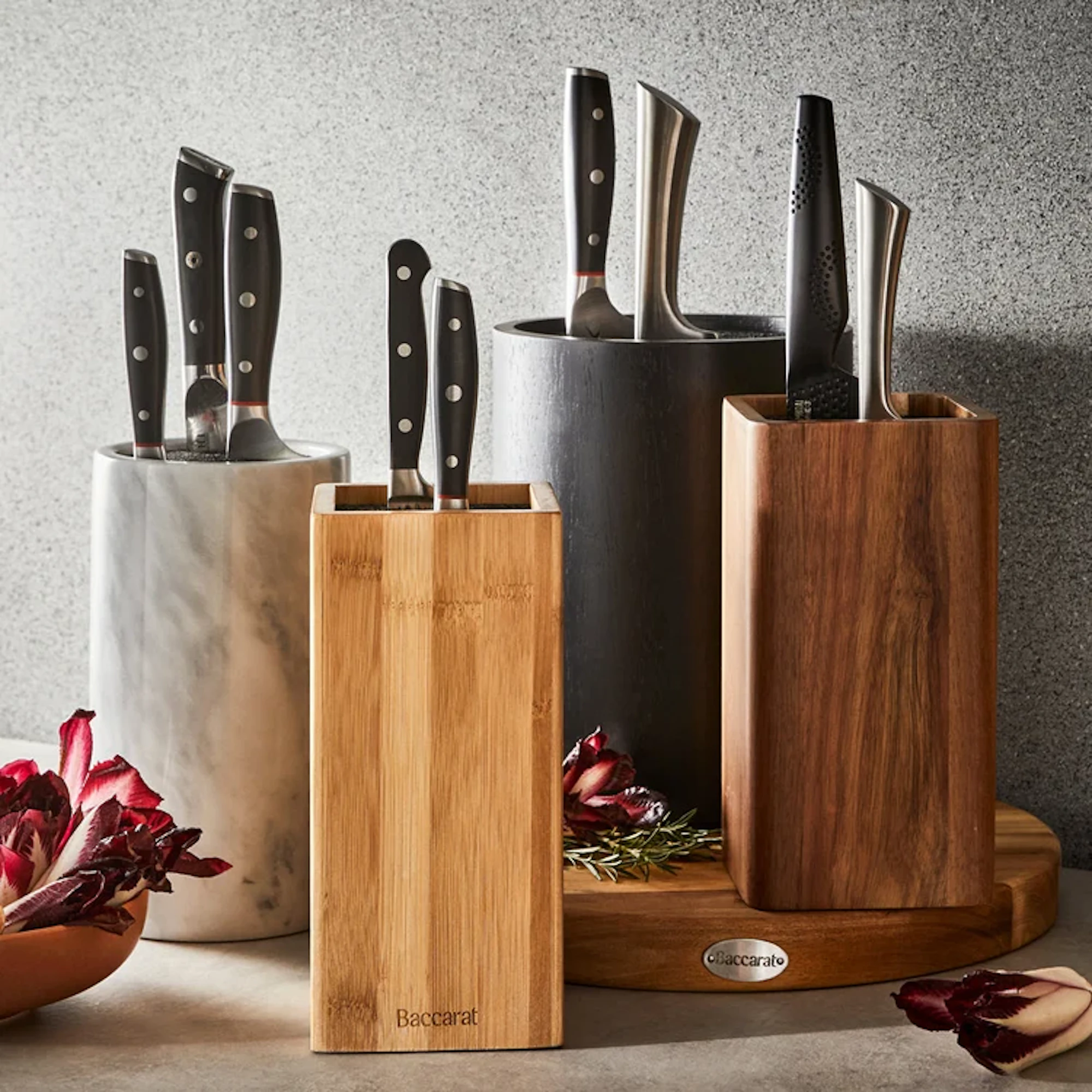
Knife Blocks
Knife blocks are a straightforward choice for larger collections and for those who want everything together on the benchtop. They keep knives organised, accessible and protected when you put them away carefully.
- Best for: Larger collections and everyday countertop access.
- Space: Uses benchtop space.
- Watch out for: Don’t scrape the blade against the slot when inserting or removing it, as this may dull the edge.
- Choose this if: You prefer having your main knives together and ready to grab.
Other types of knife storage include:
Magnetic Knife Strip/Holder
Magnetic holders keep knives off the bench while leaving them visible and easy to reach. They’re particularly handy when drawer or countertop space is tight.
- Best for: Keeping the bench clear and knives visible.
- Space: Uses wall space rather than drawer or benchtop space.
- Watch out for: Install securely, and place each knife carefully on the magnetic surface.
- Choose this if: You want easy access without sacrificing valuable bench space.
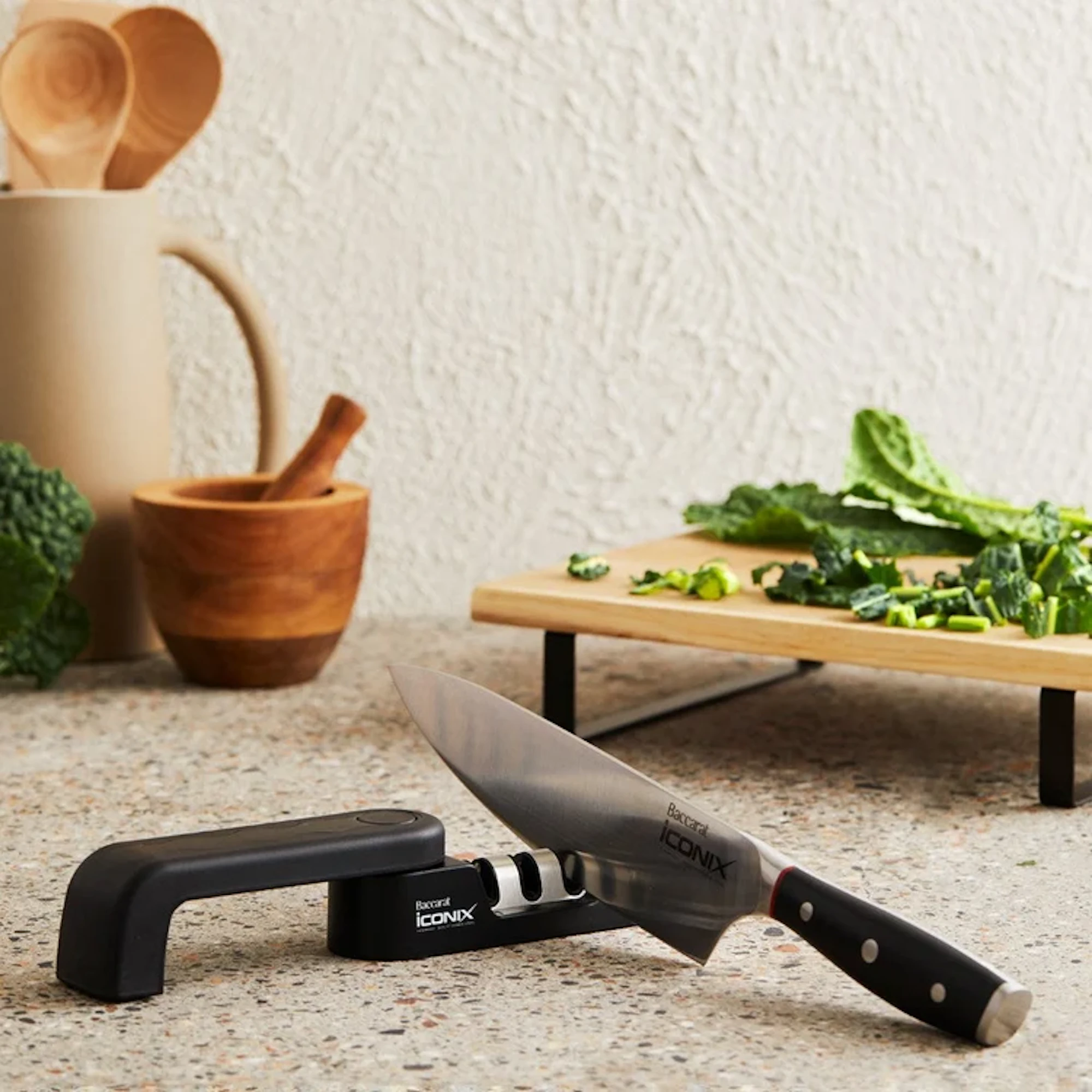
Knife Sheaths
Knife sheaths are a simple option when you have only a few knives, limited storage space, or need to protect individual blades in a knife drawer organiser.
- Best for: Small collections, drawer storage or individual knife protection.
- Space: Takes up very little room.
- Watch out for: Make sure the sheath fits the blade properly.
- Choose this if: You want practical protection without adding another permanent storage fixture.
You don’t need the fanciest storage setup to protect your blades. Three knives don’t need a ten-knife block, just as a large collection will quickly outgrow a handful of sheaths. Choose storage that matches the size of your collection, and you won’t end up paying for space you don’t need!
The Care Habits That Keep the Guarantee Valid
Good storage protects the knife between uses, but everyday care keeps the blade performing well for the long run. Hand washing, drying, honing, sharpening and proper storage all help you get the most from your blades.
- Hand wash and dry immediately: We recommend hand-washing Baccarat knives with care and drying them right after cleaning. As a general rule, avoid the dishwasher.
- Hone regularly: Hone every few uses to help maintain the edge between sharpenings. Honing maintains the edge; sharpening is for when the blade has become genuinely dull.
- Sharpen according to the steel: When it’s time to sharpen, the steel used in your knife affects how often it needs attention. Baccarat’s Japanese steel is 420J2 at 53 HRC and generally requires more frequent sharpening, while its German steel is 1.4116 at 55 HRC and generally requires less. Explore Baccarat’s knife sharpening tools for the options available.
- Store knives properly: Use a knife block, magnetic holder or protective sheath rather than leaving blades loose in a drawer.
- Use the right cutting surface: Avoid glass, ceramic and other hard surfaces that can damage the cutting edge. A wooden or soft plastic chopping board is a better everyday choice.
The Baccarat Bottom Line
There’s no one-size-fits-all when it comes to knife storage. Think about how many knives you have, how much space you’ve got and how often you reach for them.
A block suits a larger collection, a magnetic holder frees up bench space, and sheaths protect individual blades. Whichever you choose, combine it with proper washing, drying, honing and sharpening to keep your knives performing at their best.
Browse our knife storage and knife accessories to find the right setup for your kitchen.
Frequently Asked Questions: Knife Storage
1. Is it bad to store knives loose in a drawer?
Yes. Loose knives can knock against other utensils, dull or chip their edges and create a safety risk when you reach into the drawer. Use a sheath or another dedicated storage method instead.
2. How often should I hone my knives versus sharpen them?
Hone every few uses to maintain the edge, then sharpen when the blade becomes genuinely dull. Your sharpening needs also depend on the steel: our 420J2 Japanese steel at 53 HRC generally needs sharpening more often than 1.4116 German steel at 55 HRC.
3. Does how I store or care for my knives affect the Baccarat guarantee?
It can. Our 25-year Lifetime Guarantee applies to covered products used according to the Care and Use Instructions and under normal domestic use. Damage caused by misuse or failure to follow those instructions is excluded. Read our full warranty information before making a claim.
4. What’s the cheapest safe way to store a few knives?
For a small collection, individual knife sheaths are a simple, space-saving way to protect each blade, particularly if you’re after knife storage for drawers.
5. Can Baccarat knives go in the dishwasher?
Hand washing is recommended for Baccarat knives to help maintain their condition. The Sabre steak-knife range is dishwasher-friendly, although we still recommend hand washing and drying immediately after cleaning.
Related Articles
- These Are The Best Ways To Store Your Knives — More practical knife storage ideas from Baccarat.
- Japanese Steel vs German Steel – What’s the Difference? — Understand how steel type affects sharpening and performance.
- From Chopping to Slicing, Here’s Your Definitive Guide on Kitchen Knives — A useful guide to choosing and caring for kitchen knives.