What Makes a Good Kitchen Knife? From Chopping to Slicing, These Are the Types You Need
Steel hardness, a full tang and blade shape decide whether a knife is good, not a single “quality” claim on the packaging. A straight edge that cleanly dices vegetables won’t necessarily saw through a crusty loaf without crushing it, and a blade too thin will slip rather than cut cleanly through a pumpkin.
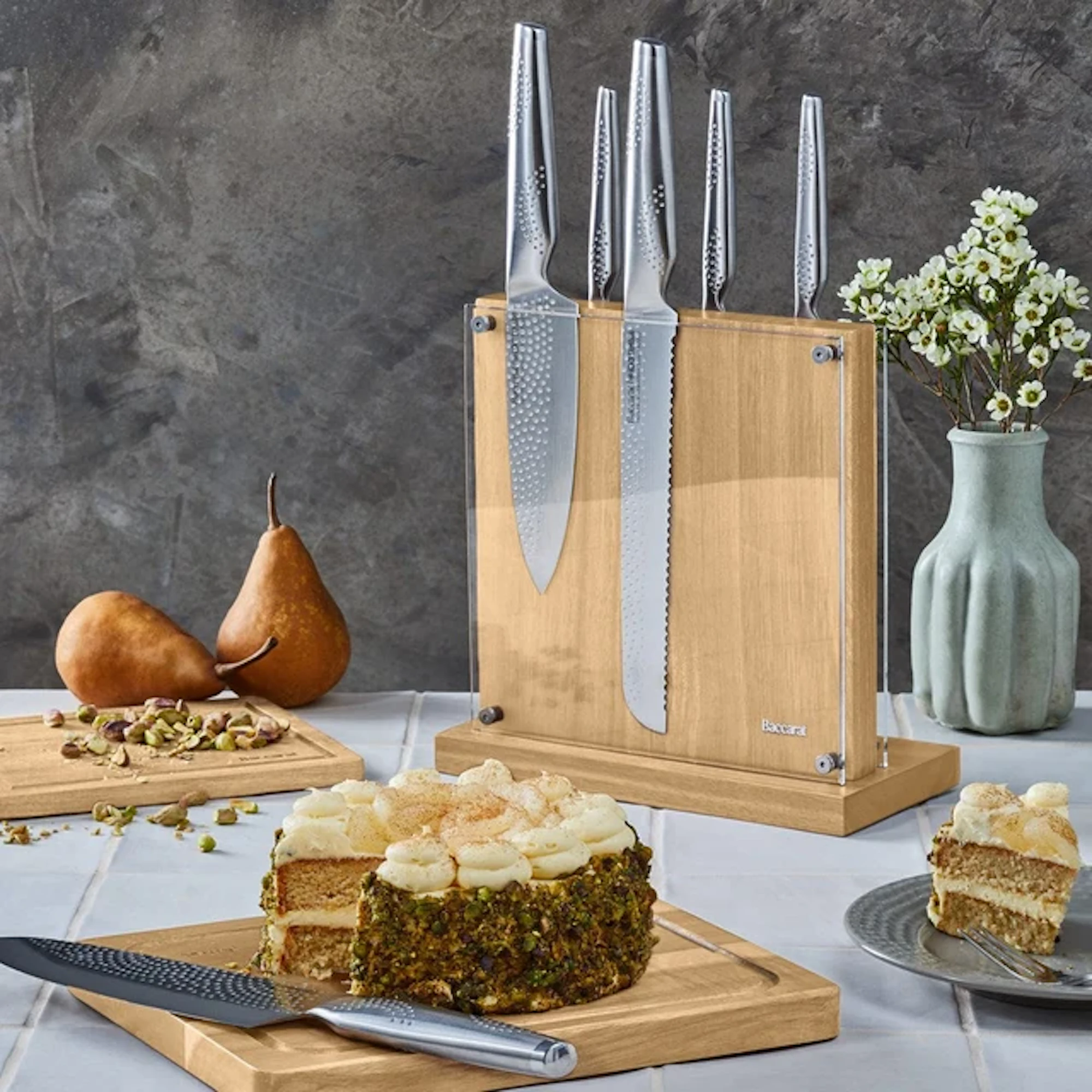
With a knife block, you can keep blades suited to different kitchen tasks close at hand.
TABLE OF CONTENTS
- What Actually Makes a Knife “Good” (It's Not Just Sharp)
- The Knife Types and the Job Each One Is Actually Built For
- Why One Knife Can't Do Every Job
- Building the Few Knives That Actually Cover Your Kitchen
- The Baccarat Bottom Line
- Frequently Asked Questions: What Makes a Good Kitchen Knife?
- Related Articles
What Actually Makes a Knife “Good” (It's Not Just Sharp)
A good kitchen knife rests on three checkable things: steel hardness, its tang and the way the handle is built. A blade can be sharp and still be the wrong tool, especially if any of those features don’t match what you’re cutting.
Baccarat offers both Japanese and German steel knives across its ranges, and each has different characteristics.
- Japanese steel (420J2): 53 HRC*. These knives tend to be thinner, which allows finer cuts, but they require more frequent sharpening. Ideal for herbs, fish, and fine dicing.
- German steel (1.4116): 55 HRC*. These knives tend to be thicker, making them well suited to thick meat, dense vegetables, and everyday chopping, and they require less sharpening.
Run a Japanese-steel and a German-steel chef's knife through the same week of pumpkin prep, and you’ll notice how quickly the Japanese blade will need to hit the sharpening steel. It's just the cost of the thinner edge, but it’s not a flaw.
* HRC means Rockwell Hardness – C scale. The higher the HRC rating, the harder the knife steel. Hugh and Stanley Rockwell developed the Rockwell hardness scale in the early 20th century to measure the hardness of metals.
Beyond the steel itself, three more things separate a well-made knife from an average one:
- Blade angle. 15–20 degrees is the most versatile angle across its range.
- Full tang. If a knife has a full tang, the metal blade extends through the handle. This allows increased force and leverage when cutting.
- Handle construction. Baccarat has several handle designs across its ranges. Triple riveting secures polymer and wooden handles to a full tang, while one-piece seamless stainless-steel handles are durable, sanitary and balanced. This construction avoids the crevices where bacteria and food debris collect.
The question isn’t whether a knife is “good” or not; it’s more so: good for what? Always start with the job it needs to do.
The Knife Types and the Job Each One Is Actually Built For
There’s a reason you’ll find different knives in a kitchen. A bread knife has a job a chef’s knife can’t do, and the same goes for a paring knife, utility knife or carving knife.
Chef Knife or Santoku Knife
A chef’s knife or santoku knife is the natural starting point if you want one versatile option for everyday prep. It’s best to start with a universal knife like this one, then add other blade types as needed. The curved blade on a chef’s knife suits a rocking chop that’s great for onions, garlic and herbs, while a santoku’s broader, flat blade is best for slicing and dicing fish, vegetables and boneless meat.
Bread Knife
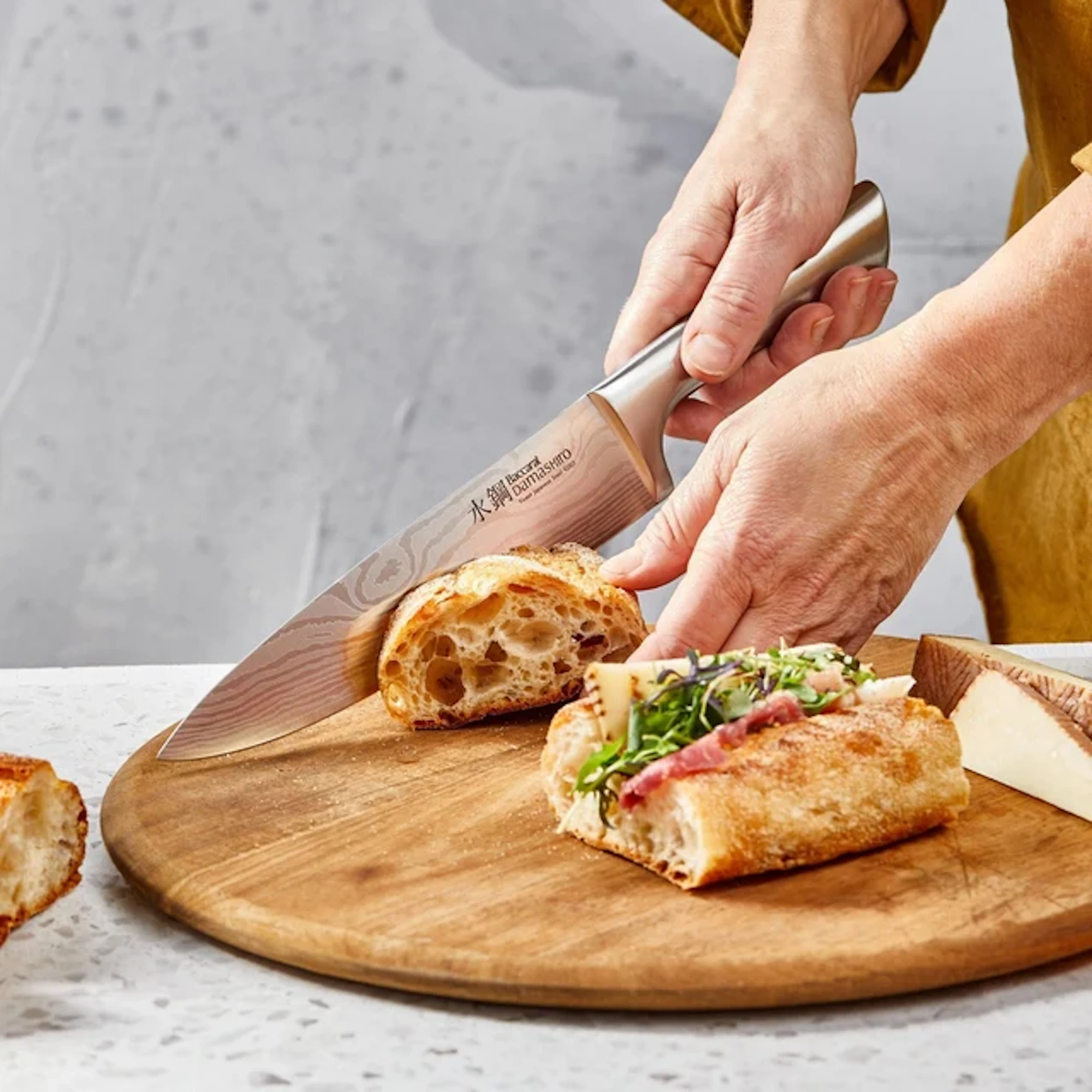
A bread knife tackles one very specific problem: cutting across a tough exterior without crushing what’s underneath. Its serrated edge saws through crusty bread while protecting the softer interior. Baccarat’s bread knives have serrations that help cut foods that are hard on the outside and soft on the inside, including bread and tomatoes.
Paring Knife
A paring knife is the small, precise member of the kitchen knife collection, unlike the larger, heavier chef’s knife. Baccarat’s paring knives are suitable for peeling and slicing fresh produce, as well as more intricate jobs such as deveining, skinning mushrooms and cutting small garnishes.
Utility Knife
A utility knife sits comfortably between the smaller paring knife and larger everyday knives. Baccarat’s utility knives are medium-sized and versatile, with uses including slicing, portioning and chopping, as well as preparing fruit, vegetables, fish and cheese. It’s a handy middle ground when a paring knife is too small, and a chef’s knife is more than you need.
Carving Knife
A carving knife does exactly what it sounds like it’ll do: it carves. The narrower blade and curved profile give it the steady, controlled stroke straight-edged chef’s knives lack, making it perfect for slicing cooked meat without tearing it. Baccarat’s carving knives are the ones to reach for on a Sunday roast, whole ham or Christmas turkey.
Cleaver
A cleaver’s thick, weighted blade does the work a lighter knife can't, driving straight through bone and dense produce instead of sawing at it. Baccarat’s cleavers can easily portion poultry, chop through bone and break down root vegetables in a single strike.

Why One Knife Can't Do Every Job
A single knife can't cover every job because one edge, one thickness and one blade shape can't be right for all of them at once. Every feature that makes a knife excel at one task works against it at another:
- A chef’s knife's straight edge will squash a ripe tomato’s skin instead of slicing through it cleanly; there's no serration to grip something that smooth and round.
- A pairing knife forced through a whole cabbage can easily slip. Without a full tang running the length of the handle, there's no leverage behind the blade to drive it through with control.
- A bread knife dragged across a fish fillet will tear through the flesh instead of cutting it cleanly. The serrated edge is there to grip crust, so it’ll catch on delicate flesh instead of gliding through it.
- A cleaver's thick, weighted blade will crush a segment of citrus or mash a soft herb instead of cutting it cleanly; there's no fine edge for delicate work.
Building the Few Knives That Actually Cover Your Kitchen
If you’re starting from scratch, start with a versatile santoku or chef’s knife, then add a few different sizes of utility knives and a bread knife.
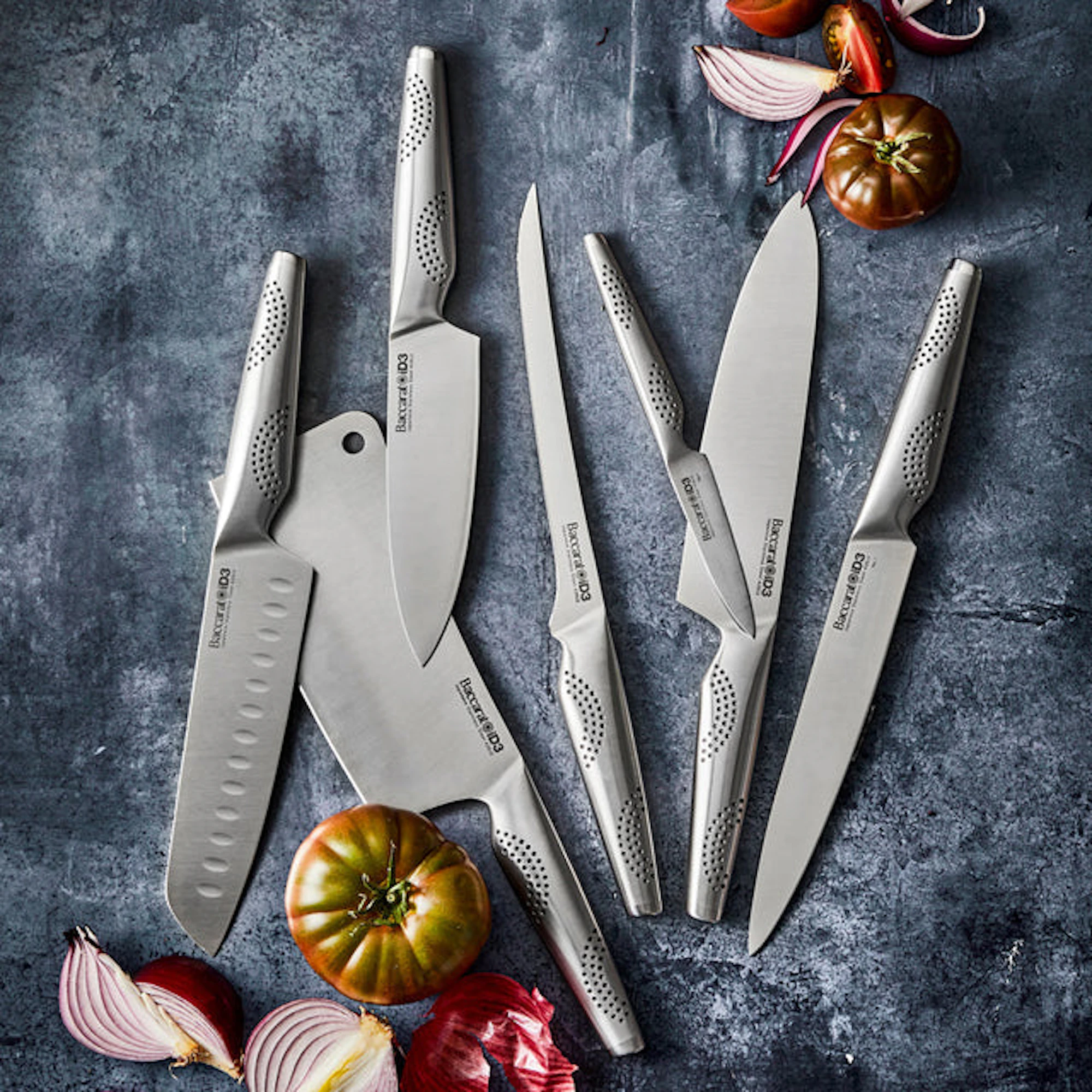
For shoppers who want a more complete first collection, a knife block or knife set will feature most essentials depending on the set size. These could include:
- Chef knife for everyday veg, herbs and meat
- Santoku knife for slicing, dicing and mincing
- Paring knife for smaller, detailed preparation
- Bread knife for crusty loaves that don’t crush the crumb
- Utility knife for versatile everyday jobs
- Carving knife for cleanly slicing cooked meats
- Kitchen shears as an optional addition
If you rarely carve a roast, there’s little reason to prioritise a carving knife. If you’re breaking down bone or poultry often enough to feel it, a cleaver is one blade that’ll be worth adding to the collection. The idea is to build a knife collection around your kitchen, not around an empty slot in a block.
Baccarat’s Lifetime Guarantee warranty covers eligible Baccarat products (excluding kitchen appliances and accessories) and begins from the date of purchase and continues for 25 years. It covers defects in workmanship or materials, or abnormal deterioration, when the product is used according to Baccarat’s care and use instructions and under normal domestic use.
The Baccarat Bottom Line
The right knife for the task will beat the biggest block on the shelf, every time. Before you head out to buy another knife you might not need, consider what’s missing from your kitchen, and then check it against steel hardness, tang and blade shape rather than how sharp it feels in the shop.
Explore Baccarat’s knife blocks or sets if you’re building a collection, or browse the individual chef’s, santoku, paring, bread, utility and carving knives if you know which job you want to tackle.
/
Not sure which knife is right for your cooking style? Here’s a comprehensive guide to the Baccarat knife range.
Frequently Asked Questions: What Makes a Good Kitchen Knife?
1. What makes a kitchen knife good quality?
A good kitchen knife has steel, construction and blade design suited to the job. Baccarat’s knife guidance highlights factors such as steel hardness, blade angle, sharpening, and handle construction.
2. Do I really need more than one kitchen knife?
Not necessarily, but Baccarat recommends starting with a versatile chef’s or santoku knife and adding utility and bread knives as needed. You can then add more specialist knives based on how you cook.
3. What’s the difference between Japanese and German steel knives?
Baccarat’s Japanese steel is 420J2 at 53 HRC, while its German steel is 1.4116 at 55 HRC. Baccarat says Japanese knives tend to be thinner and allow finer cuts, while German knives tend to be thicker and require less sharpening.
4. What knife should I buy first if I only own one?
Baccarat recommends starting with a versatile santoku or chef’s knife. Either gives you a firm foundation for everyday chopping, slicing and dicing before you add more specialist knives.
5. How long should a good kitchen knife last?
A well-made knife, cared for properly, should last for decades, but there’s no fixed lifespan. Baccarat's Lifetime Guarantee covers eligible products for 25 years from the date of purchase, defects in workmanship or materials, and abnormal deterioration under normal domestic use. That's a guarantee period rather than an exact expiry date, and a well-maintained knife can easily outlast it.
Related Articles
- Your Comprehensive Guide to the Baccarat Knife Range. Learn more about the different types of kitchen knives, what each one is designed for and how to care for them.
- Japanese Steel vs German Steel – What's the Difference?A closer look at the differences between Japanese and German steel, including hardness, blade thickness and sharpening.
- From Chopping to Slicing, Here's Your Definitive Guide on Kitchen Knives. Learn more about the different types of kitchen knives, what each one is designed for and how to care for them.